Jumat, 31 Januari 2020
Show HN: Python Stream Processing for Humans https://ift.tt/2OeqHRm

Show HN: What is your opinion on this online resume? – More info in comments https://ift.tt/2RZQRs8
Show HN: Ultra-compatibility demo, Jan 2020; How many browsers can you identify? https://ift.tt/2UdoDgg
Show HN: SMB/NFS Cloud Gateway – Mount Your Cloud Storage https://ift.tt/37LIes2
Show HN: Regex Cheatsheet for the Haters https://ift.tt/2GCkTND
Show HN: Periodic element-like logo generator https://ift.tt/2tX1dkT
Show HN: I wrote about book rebasing in Git https://ift.tt/37K6Jpz
Show HN: Practice your tablet drawing accuracy https://ift.tt/31btEI0
An Ever-Changing Market Street
By Jeremy Menzies
As we look towards a new future for Market Street under the Better Market Street Project, here's a brief look back in history at Market Street from the 1850s to 1970s.
From muddy cart tracks and plank walkways to wide brick sidewalks, transit lanes and bikeways, Market has been the ever-changing heart of our city since it was established in the mid 1800s.
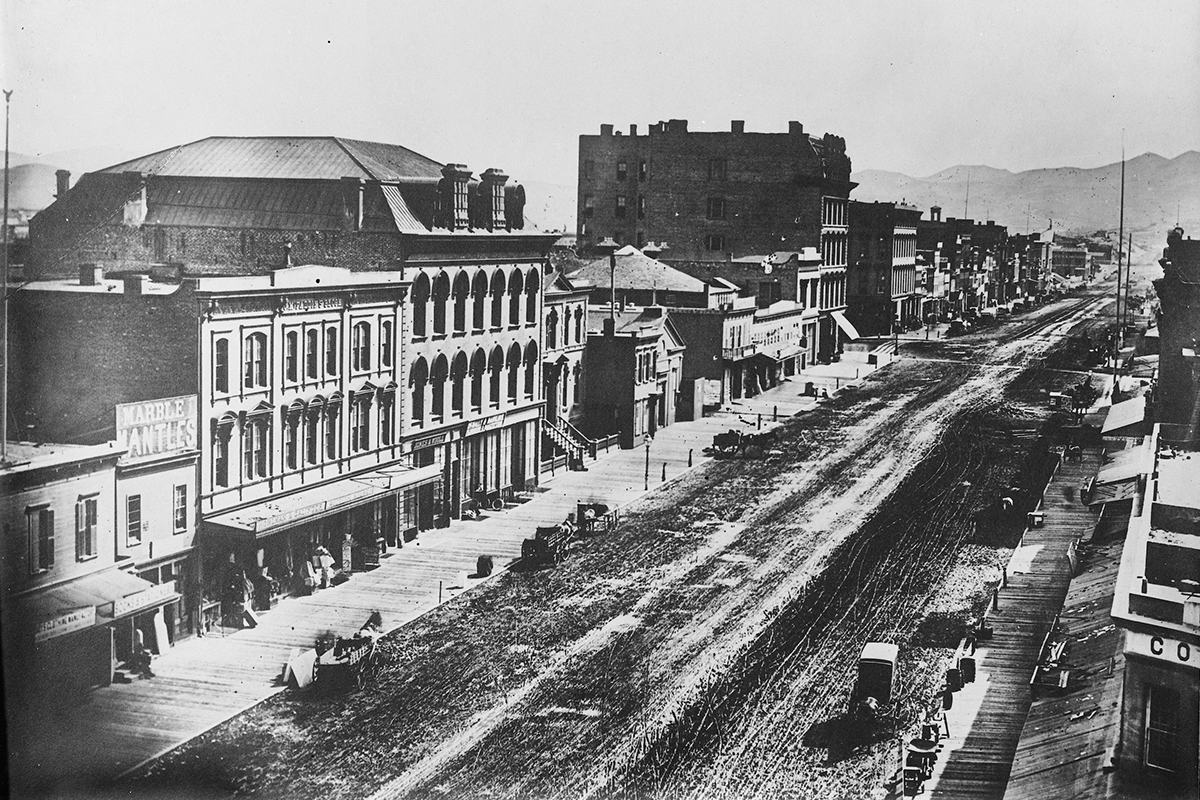
First surveyed in 1847 by Jasper O'Farrell, Market Street was laid out in part to provide a transition between the two opposing street grids north and south of Market. Planned as the city's widest street, Market was meant to be San Francisco's main boulevard and quickly became one of the busiest thoroughfares in town. The photo above was taken circa 1856 looking west from 3rd Street, a time when downtown looked more like a small town than a city.
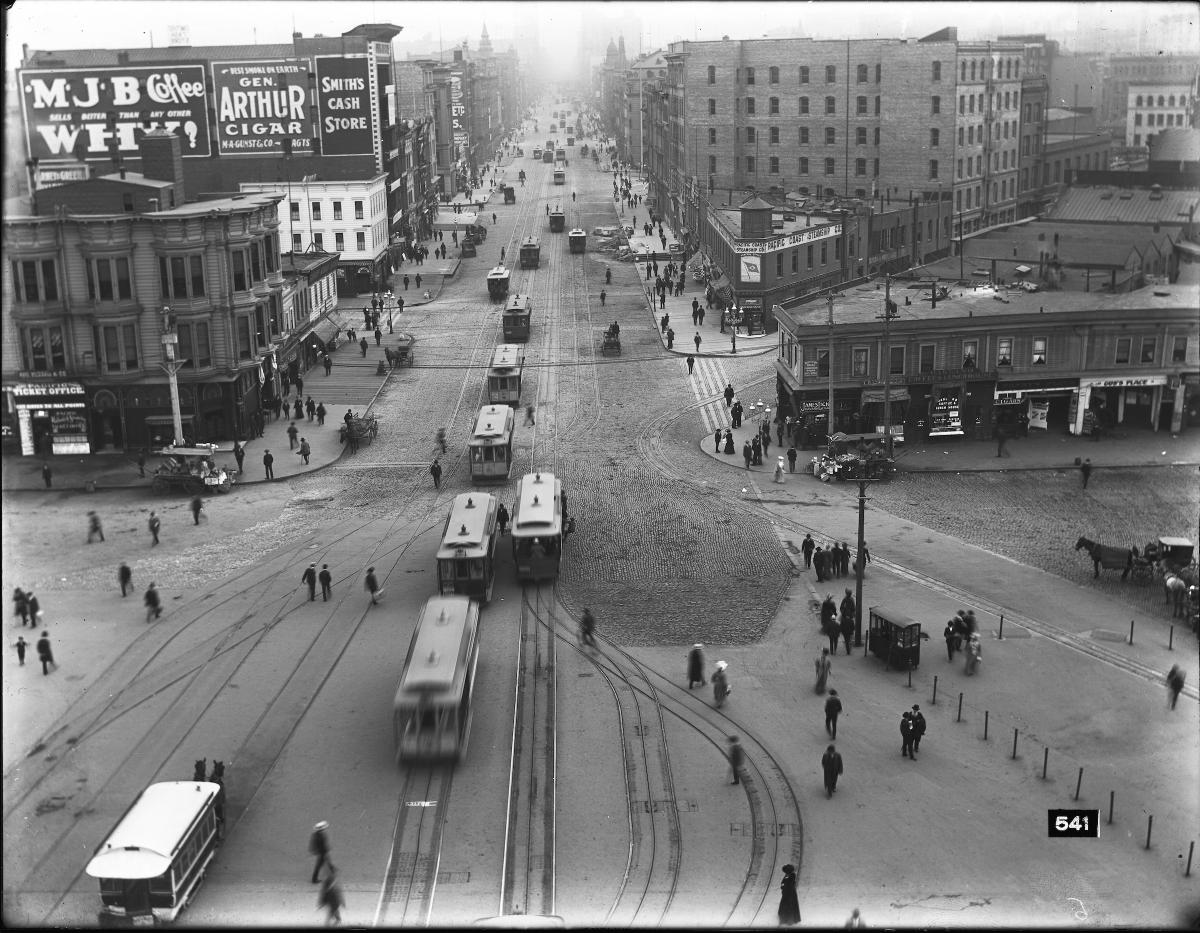
Long before hybrid diesel buses and e-scooters, Market Street was home to multiple cable car and horse car lines that provided service along the corridor and connections to farther-flung destinations. Soon after their invention in 1873, cable cars grew to dominate public transit in the last decades of the 19th Century. This 1905 view was taken looking west from the Ferry Building during a peak time for cable cars on Market.
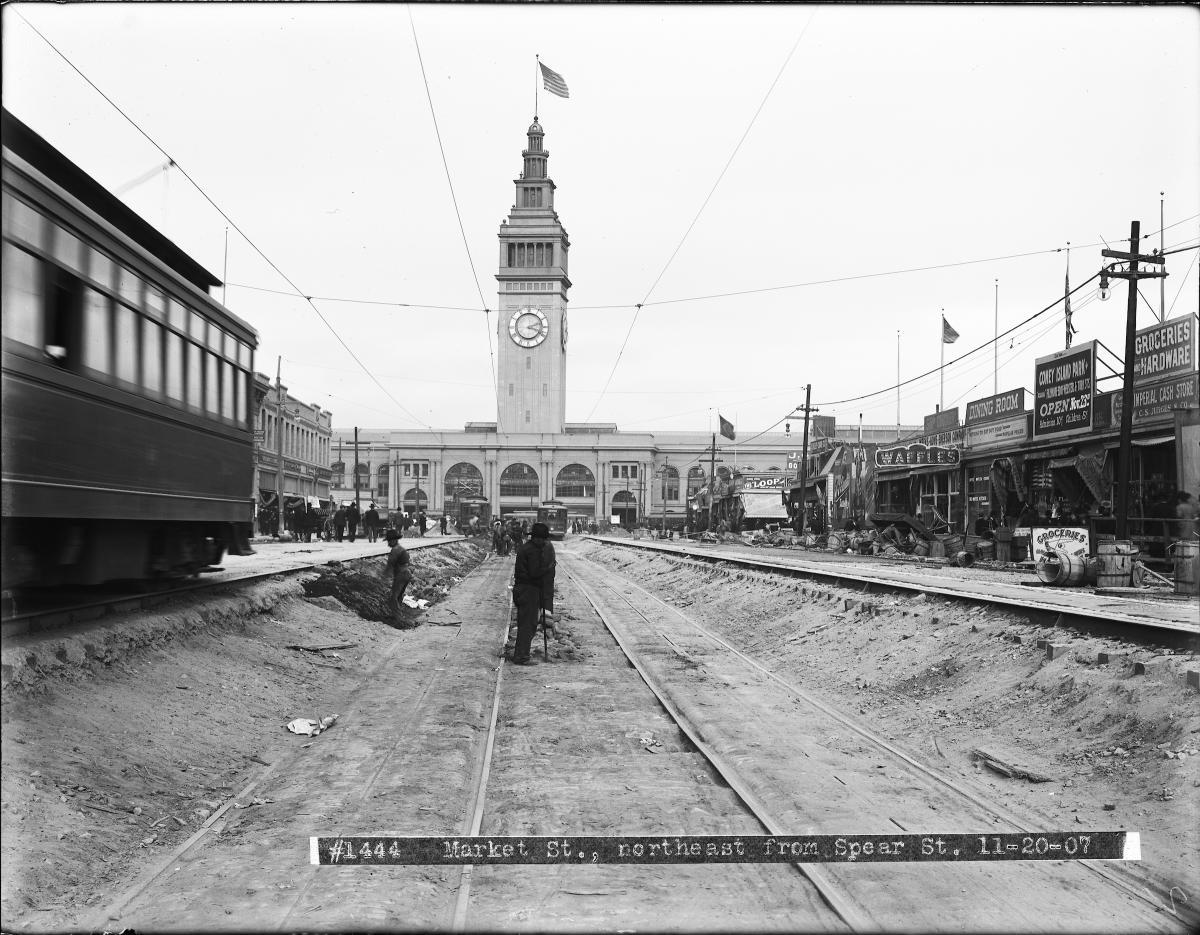
The 1906 Earthquake and Fire completely changed the transit landscape of San Francisco and marked a complete change to Market Street's role in our transportation network. Following the disaster, every cable car line was removed from Market and the street was reconstructed for faster, more efficient electric streetcar operation. This 1907 shot shows workers just west of the Ferry Building working on abandoned cable car tracks that would soon be buried under the pavement to make way for electric streetcars.
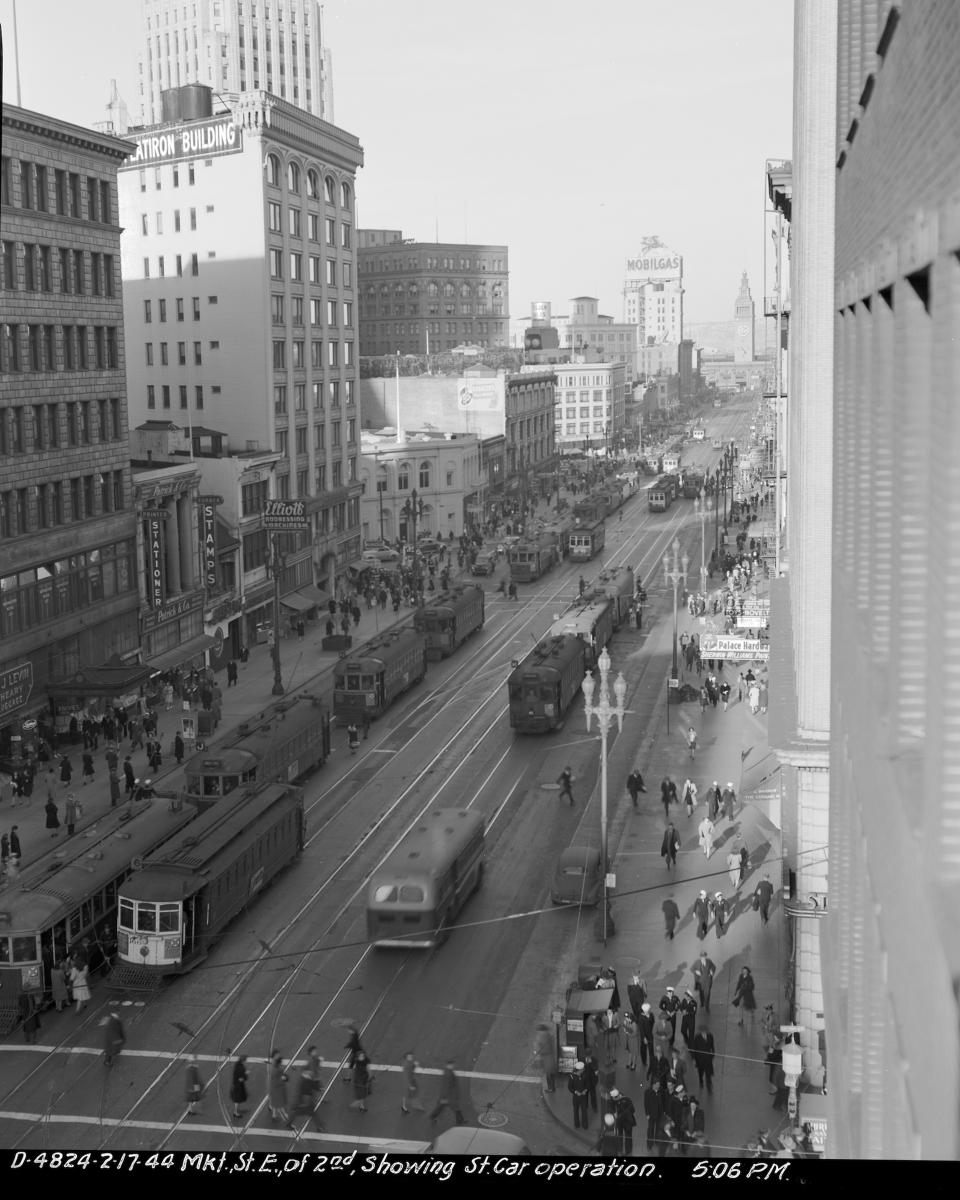
During the 1930s and '40s, four tracks of streetcar traffic (two inbound, two outbound) dominated Market Street. Dubbed "the roar of the four" due to the noise created by dozens of hulking streetcars plying the road. Transit was certainly king of the road during this period of high ridership.
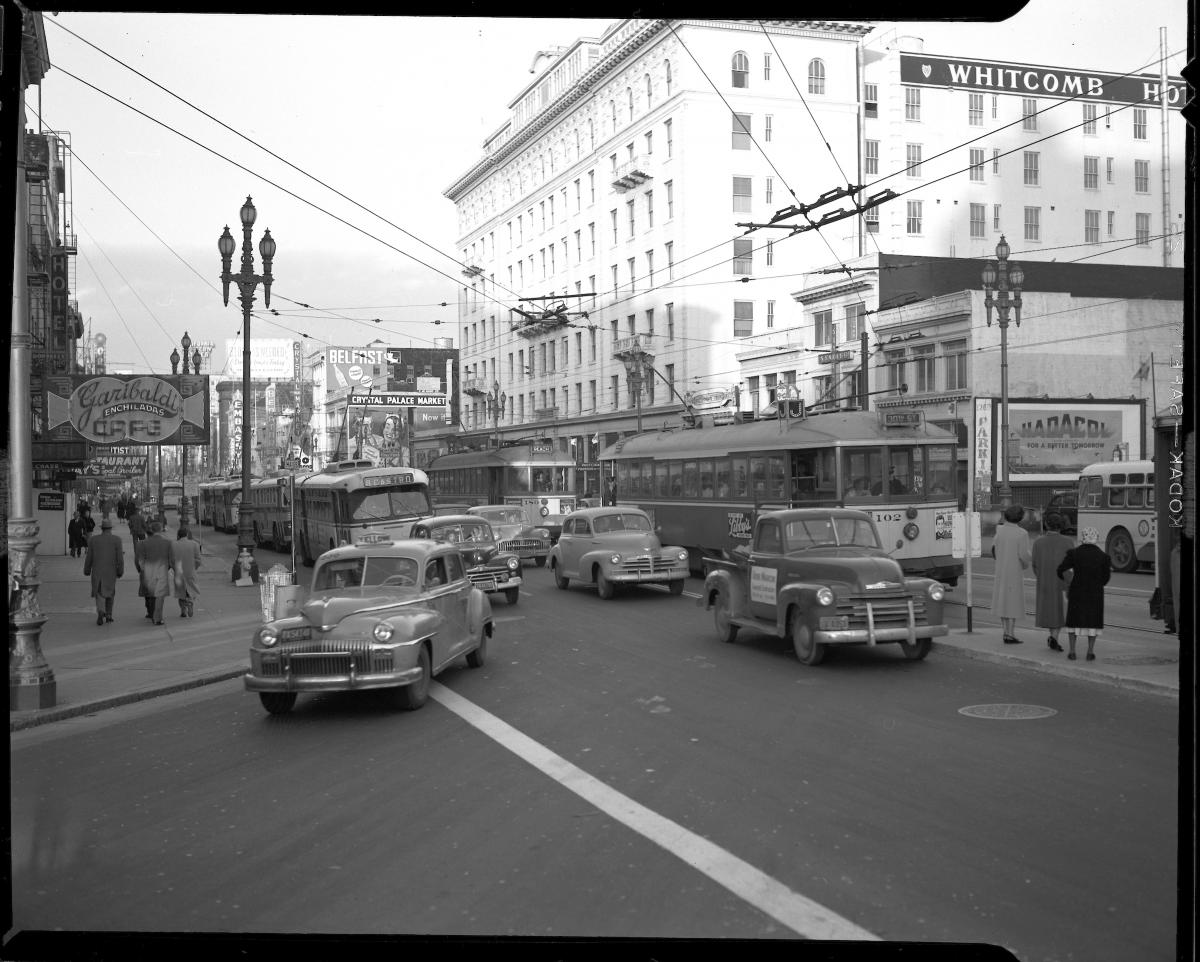
Following World War II, Market Street faced an increased traffic burden as personal car ownership climbed and transit ridership declined. Traffic on Market Street slowed down all travel modes and made for a hazardous pedestrian environment, especially during rush hours. Congestion became enough of a problem that in a 1963 report, City planners analyzed the possibility of moving all auto traffic off of Market and all streetcar traffic into an underground subway to rebuild the street as a pedestrian mall.
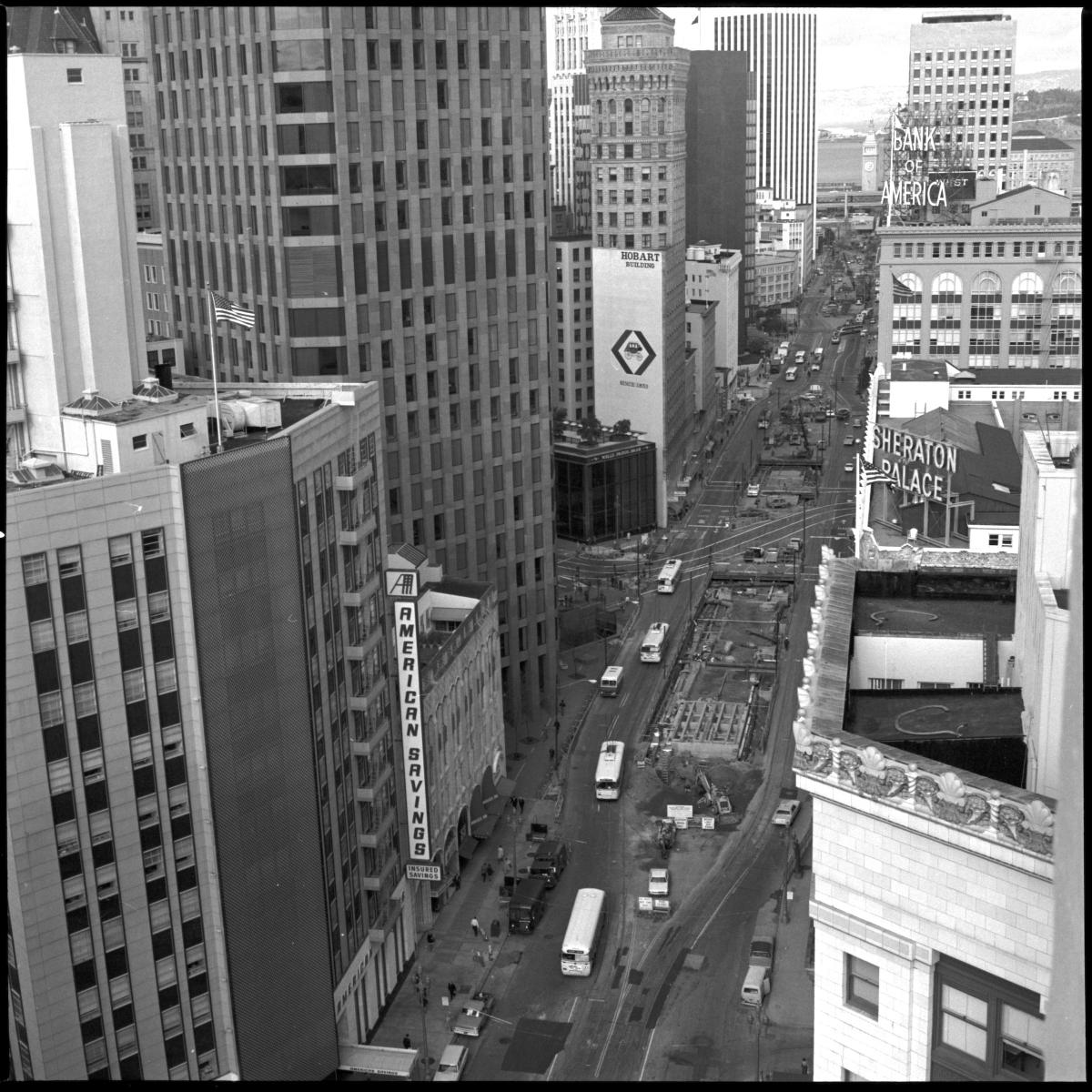
Perhaps the most significant change since 1907 came to Market in the 1960s and 70s with the construction of the Market Street Subway and BART tunnels and stations. Plans and proposals for a Market subway had been floated since at least 1912, but it wasn't until the BART proposal gained enough support to proceed that one version of that dream was realized.
Today, Market is transitioning to yet another incarnation of itself with more room for people walking, riding transit, and biking. Just one more chapter in the history of our city's most storied boulevard. Check out more photos of Market Street through the years on the SFMTA Photo Archive and follow us on Instagram!
Published January 31, 2020 at 05:56AM
https://ift.tt/318Mu2c
Show HN: Using Pandas/WebGL/SQLite to map a million new sister cities https://ift.tt/2REvDRK
Show HN: High quality SVG Country flags for your website https://ift.tt/37S0UXj
Show HN: Tutorial: Build Decentralized YouTube Using IPFS https://ift.tt/2Od2Gu0
Show HN: I Built a SasS Using Vapor and Puppeteer https://ift.tt/36Bg8OF
Kamis, 30 Januari 2020
Show HN: A self hosted email engine https://ift.tt/2OblBWc
Show HN: A tool to handle API downtime with 2 LOC https://ift.tt/37Me8os
Show HN: Interactive Periodic Table in JavaScript https://ift.tt/37Fr1jL
Show HN: Write Using Emojis https://ift.tt/3158pHw
Show HN: Header-only C library for arbitrarily deep neural nets https://ift.tt/38V0f7x
Show HN: Year 2773 https://ift.tt/2S099JT
Show HN: I made a guide with all steps for transition to freelancing in Finland https://ift.tt/2S6ceYS
Show HN: Margin-Elo for NFL Outcomes https://ift.tt/38VeRn5
Show HN: A webshop where it's possible to buy cars, 100%, online https://ift.tt/36ENVGE
Show HN: I made this logging application years ago https://ift.tt/36EC8YU
Show HN: Free Bootstrap 4 Templates for Startups and Makers https://ift.tt/2tf9twc
Show HN: A keyboard shortcut library for React https://ift.tt/36ABP1n
Show HN: Let's Destroy C https://ift.tt/2RY5wnO
Show HN: Student Happiness Ranking for Universities https://ift.tt/36zJ9u9
Show HN: Sun finder, figure out where in the world or a region has good weather https://ift.tt/2U8pi2O
This Weekend: Magnolia Blooms and Lunar New Year at the Zoo
By Schad Dalton
Events: It's Super Bowl Weekend and with the 49ers making their first appearance since 2013 it is a relatively quiet weekend in the city. However, there are still lots of fun activities for those who aren't football fans. On Saturday evening, SF State University will host performances of Beethoven during the annual Yehuni Menuhin Seminar and Festival at Knuth Music Hall. Head over to the SF Zoo on Saturday to enjoy some special Lunar New Year-themed activities. For those feeling a little wintertime cabin fever, spring is just around the corner and there are some opportunities to enjoy the great outdoors, including a field trip of Lobos Creek Valley in the Presidio and the annual Magnolia Bloom at the SF Botanical Garden. Lastly, the Asian Art Museum free admission day is this Sunday (and every first Sunday of the month) in the Civic Center. Read more about our featured events below.
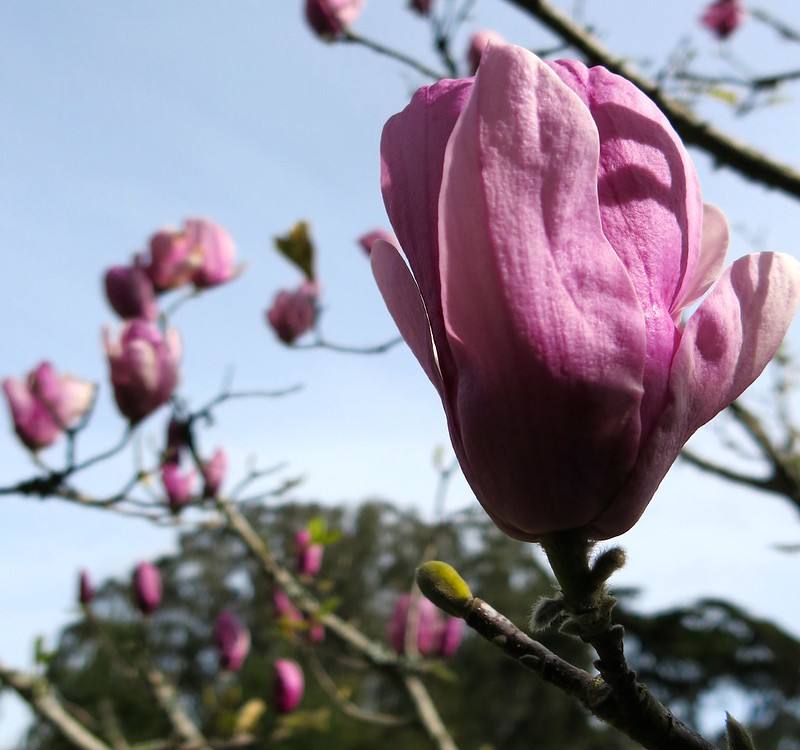
Check out the beautiful magnolia blooms at the SF Botanical Garden this Saturday in Golden Gate Park. Photo: torbakhopper/Flickr
SF Botanical Garden Magnolia Bloom
Saturday, All Day
SF Botanical Garden (Golden Gate Park)
The annual bloom of over 200 magnolia trees typically reaches its peak from mid-January through March and this weekend will offer a prime to to view the stunning natural display at the SF Botanical Gardens in Golden Gate Park. While the tree branches are generally rather bare, they make for a more visually dazzling relief as the magnolia buds bloom into pink, magenta, and white flowers that provide some of the first pops of color of the spring season.
How to Get There on Muni: Riders may take the N Judah Line, as well as the 6 Haight/Parnassus, 7 Haight/Noriega, or 44 O'Shaughnessy routes to near the botanical garden.
Muni Service Notes: There are no planned service changes for this event.
Free SF Zoo Day for "Rats"
Saturday, All Day
SF Zoo
Are you thinking about visiting the zoo? Were you also born in the Year of the Rat? Then this Saturday has you covered with a free zoo day! If you or a loved one were born in 1936, 1948, 1960, 1972, 1984, 1996, or 2008, then admission to the San Francisco Zoo will be free in celebration of the Lunar New Year. In addition to the traditional zoo offerings, visitors this Saturday may also enjoy the Chinese lion and folk dance performances at 11 a.m. and 1 p.m.
How to Get There on Muni: Riders may take the L Taraval Line, as well as the 18 46th Avenue, 23 Monterey, 29 Sunset or the 57 Parkmerced routes to near the zoo.
Muni Service Notes: There are no planned service changes for this event.
Upcoming Events: Next weekend will host several large-scale events around town. As Spring Training draws ever closer, get an early baseball fix by swinging by Oracle Park for the annual Giants FanFest. Celebrate the Lunar New Year during the weekend-long Chinese New Year Street Fair, and don't miss the spectacular parade on Saturday evening.
Remember that you can take Muni for the entire day for a single $5 fare. The new $5 Day Pass, available on MuniMobile®, is part of Muni’s recent fare changes. The pass is intended to encourage a safe, convenient way to pay your fare and quickly board Muni vehicles, which reduces overall travel time for everyone. The $5 Day Pass is Muni bus, rail and historic streetcars only.
“On Tap” gives you a heads up about the big events in town and what Muni routes and lines will get you to the party. Look for this feature to be posted usually on Thursdays for a look ahead to the weekend. Check out our Weekend Traffic & Transit Advisory for more details.
Published January 30, 2020 at 04:36AM
https://ift.tt/2O8hD0D
Show HN: WASM and Native Gameboy Emulator (Rust) https://ift.tt/36B9SXs
Show HN: Full AWS Inventory on a Single HTML Page (2018) https://ift.tt/37HlUje
Show HN: Design systems, illustrations, mobile and desktop UI-kits https://ift.tt/2RX8N6Z
Rabu, 29 Januari 2020
Show HN: A Tour of Standard ML https://ift.tt/37DSjav
Show HN: Startup Risk Framework (Copyable Notion Template) https://ift.tt/2vtB2T3
Show HN: Time series database by the creator of fasthttp Go package https://ift.tt/3177TJ5
Show HN: Debugger that generates video visualizations for algorithm learning https://ift.tt/2uCGdjl
Show HN: Neovide, a No Nonsense Neovim Client in Rust https://ift.tt/3aMSVMN
Show HN: Webdext – Extract listing data without coding https://ift.tt/37B53hV
Show HN: Thinc, a new deep learning library by the makers of spaCy and FastAPI https://ift.tt/37E815e
Show HN: ExpDealsHotel Reveal Secret Hotel Name from Priceline's Express Deals https://ift.tt/37C1pnU
SFMTA Travel Decision Survey 2019
By Maia Moran
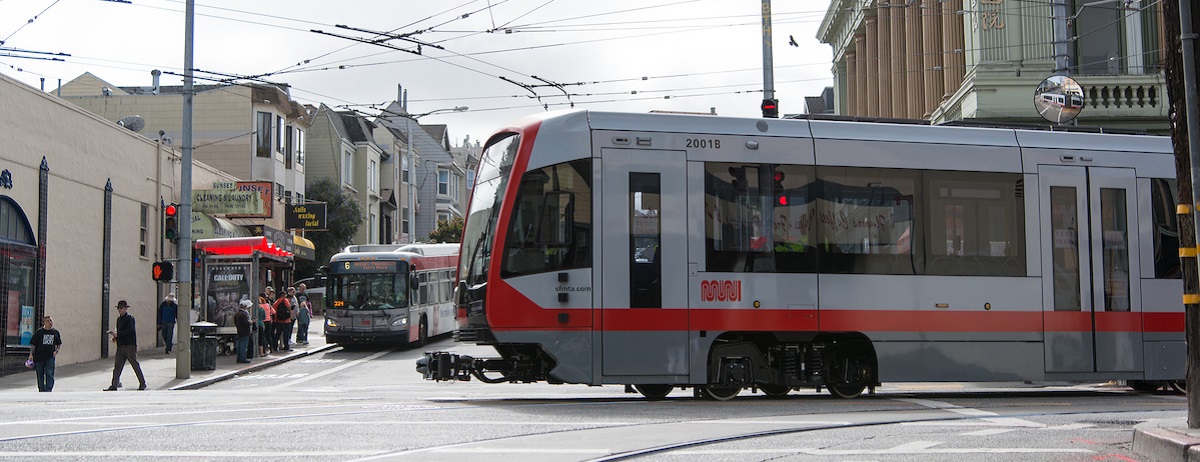
The SFMTA completed its biennial Travel Decision Survey which estimates mode share for travelers whose trips either began, ended, or were within San Francisco. The mode share results from the 2019 Travel Decision Survey and other key data sources were shared at the SFMTA’s annual Board Workshop held on January 28. Sustainable trips are growing where investments are being made in our transportation network. Our Muni Forward Program is a great example of this, which we will explain in more detail. However, based on the overall direction that our mode share is trending, we need to do more to support accessible, long-term sustainable growth. The Travel Decision Survey indicates that the proportion of people choosing cars has increased. Less driving is fundamental to every one of our goals, making performance metrics like mode shift critical.
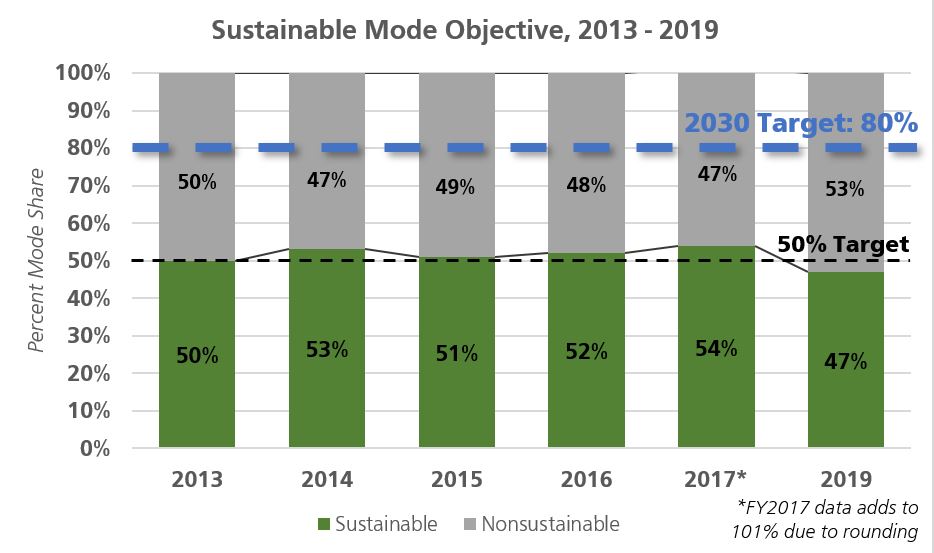
Mode share is a measure of the percentage of travelers using a particular type of transportation and is an indicator measuring how well San Franciscans can access their daily needs. Mode share is used to track progress towards Strategic Plan Objective 2.2: 80 percent sustainable trips by 2030.
Sustainable modes are defined as modes that support the city’s climate action goals and meet the long-term economic, social, and physical needs of the city. Because they directly support these goals, the SFMTA promotes walking, bicycling, and public transit, as well as those modes that complement their use. As mobility options shift and expand, trip categorizations have changed. In 2019, to align with the Strategic Plan, trips were categorized as sustainable or non-sustainable with the primary shift being TNC trips categorized as non-sustainable. For comparative purposes, all past data has been updated to reflect 2019 categories.
The Travel Decision Survey is a telephone survey conducted by research firm Corey Canapary & Galanis. Interviews of 840+ Bay Area residents took place from May through August 2019, capturing over 10,400 reported trips. The survey was conducted annually from 2012 to 2017 but switched to a biennial survey in 2017 to capture more significant changes in mode shift between survey administrations.
Key Findings
- Sustainable mode share for all trips in 2019 is 47 percent, down from 54 percent sustainable mode share two years ago and below the 80 percent goal by 2030.
- Compared to 2017, walking and transit mode share both decreased while the percent of all non-sustainable mode categories increased.
- The number of raw trips taken in San Francisco has increased over time, based on Travel Decision mode share data and the SF-CHAMP model. From 2017 to 2019, the raw number of sustainable trips decreased, as well as the percent of sustainable trips.
Results
Mode Share & Trip Data
In 2019, sustainable mode share fell to below 50 percent. Between 2017 and 2019, sustainable mode share dropped from 54 percent to 47 percent. Key drops occurred in transit (4 percent decrease) and walking (3 percent decrease) mode share and there were increases across all non-sustainable options including TNC usage, carpooling, and driving alone. Biking has seen incremental increases in mode share but has remained generally steady when rounding for analysis.
Raw trip numbers have also increased, with total daily trips reaching over 4.46 million trips in 2019 representing an increase of 250,000 trips since 2017. When using raw trip numbers, non-sustainable modes increased by over 400,000 trips between 2017 and 2019 while sustainable mode dropped by 155,000 trips, indicating we are gaining non-sustainable trips more than we are losing sustainable ones. Total daily trip estimates are calculated using SFCTA’s latest SF-CHAMP model.
Income & Mode Choices
In addition to trip purpose and mode, the survey collected basic demographic data including age, income, race, and gender. Respondents were given the option to decline to respond to demographic questions so demographic analysis does not represent a complete picture of the survey pool.
For surveying purposes and population representation, responses from within San Francisco were recorded by zip code and aggregated into five geographic zones based on proximity to downtown, travel behavior, and geography.
An analysis of responses by zone and income indicate that in general within San Francisco:
- Lower-income brackets used sustainable forms of transportation with more frequency than higher-income brackets,
- Geographic regions, particularly in the southern part of the city, with less access to higher densities of transportation options observed higher rates of non-sustainable mode share.
In the Bay Area at-large, sustainable mode use was higher at middle- and upper-income brackets.
| $35,000 or less |
$35,001 - $75,000 |
$75,001 - $100,000 |
$100,001 - $200,000 |
Over $200,000 |
Total | |
| San Francisco | 59% | 51% | 46% | 43% | 44% | 47% |
| Outside San Francisco | 43% | 51% | 61% | 48% | 54% | 51% |
| East Bay | 50% | 48% | 68% | 61% | 68% | 60% |
| North Bay | 15% | 79% | 49% | 41% | 44% | 44% |
| South Bay | 39% | 55% | 22% | 29% | 39% | 38% |
Network Improvements
Though transit mode share dropped between 2017 and 2019, a closer look at ridership changes within transit reveals a more encouraging story.
Over the past year, transit ridership has decreased nationally by 2 percent and regionally by 1 percent. While Muni ridership overall has decreased, Muni ridership has fared better and dropped with smaller margins than regional and national shifts.
Ridership has grown significantly where investments have been made in the transit system. Muni Rapid lines have seen significant positive growth as service improvements have been implemented and transit prioritization programs have expanded.
Mobility Report 2019
The 2018 Mobility Report is available here. For more information, please visit: Travel Decision Survey 2019
Published January 29, 2020 at 03:06AM
https://ift.tt/2Gsdy35
Show HN: A library app built with NextJS, Prisma 2 and Apollo – explained https://ift.tt/2O5lZpe
Launch HN: Deviceplane (YC W20) – Update and Manage Devices Running Linux https://ift.tt/37BCO2F
Show HN: HN Theater – “Simple Made Easy” Is Most Popular Video of Hacker News https://ift.tt/36C6KdE
Selasa, 28 Januari 2020
Show HN: Sortify - Sort Spotify playlists by various features e.g., date, tempo https://ift.tt/2U43chW
Show HN: Xeroxed Paper Style Portfolio https://ift.tt/3aRKiR0
Show HN: Open-Source Stack for Testing and Analytics of Conversational AI https://ift.tt/37FJPje
Show HN: K3sup (0.8.0) – Bootstrapping Kubernetes 1.17 https://ift.tt/2t4DQoZ
Show HN: Library for high-performance WebSocket applications https://ift.tt/2RWyHI0
Show HN: There are 100s of similar Monitor Arms so I built this https://ift.tt/38M6yKA
Show HN: Light and Powerful modern web-framework for C++ https://ift.tt/2U0NFz9
Show HN: SaaS Growth Calculator – Calculate growth using common metrics https://ift.tt/3148fQW
Show HN: GitHub MermaidJS SVG Diagram Generator https://ift.tt/2tMFwUy
Show HN: I Made Date Countdown Timers Webpage. OpenSource. No Ads. No Login https://ift.tt/2tVdsye
Show HN: Feedback collection tool for product managers https://ift.tt/36ufGlu
Director of Transportation Report: January 21, 2020
By
In this week’s Director’s Report from the SFMTA Board of Directors meeting, Jeffrey Tumlin gave updates on the following topics:
Vision Zero
- Two fatalities since the last board meeting, both of which are also still under investigation making it too early to determine whether they are Vision Zero fatalities according to our Fatality Reporting protocol, but regardless we send our condolences to friends and families of each victim.
- Rapid Response has been conducted for three severe injury crashes also under investigation by the San Francisco Police Department, but on 43rd and Fulton where a pedestrian was severely injured by a motorist, additional daylighting is being installed on top of the recent improvements such as larger, more visible signal heads.
Shared Scooter Permit Program Update
- Permitted scooter companies were required to submit a plan describing their commitment to piloting adaptive scooters by Jan. 15. The pilot will continue through the course of the permit program.
- “Adaptive Scooter” is defined as a powered shared scooter allowing access for people with various physical disabilities. The SFMTA does not require a specific vehicle type or service model. Permittees all submitted different vehicle design and service models.
- Approximately 50 adaptive scooters will be available that include two and three-wheeled devices with the option to sit or stand.
Central Subway
- Permanent power has now been provided to the Union Square Market Street Station in conjunction with PG&E.
- The contractor is making substantial progress at all stations.
- Request for Board approval will be forthcoming on key contract modifications necessary for substantial completion:
- Automatic Train Control System
- Closeout backlog of task order contract modifications
- Substantial completion of the project remains for June 2020 with a revenue operations date of summer 2021.
Market Street Ribbon Cutting
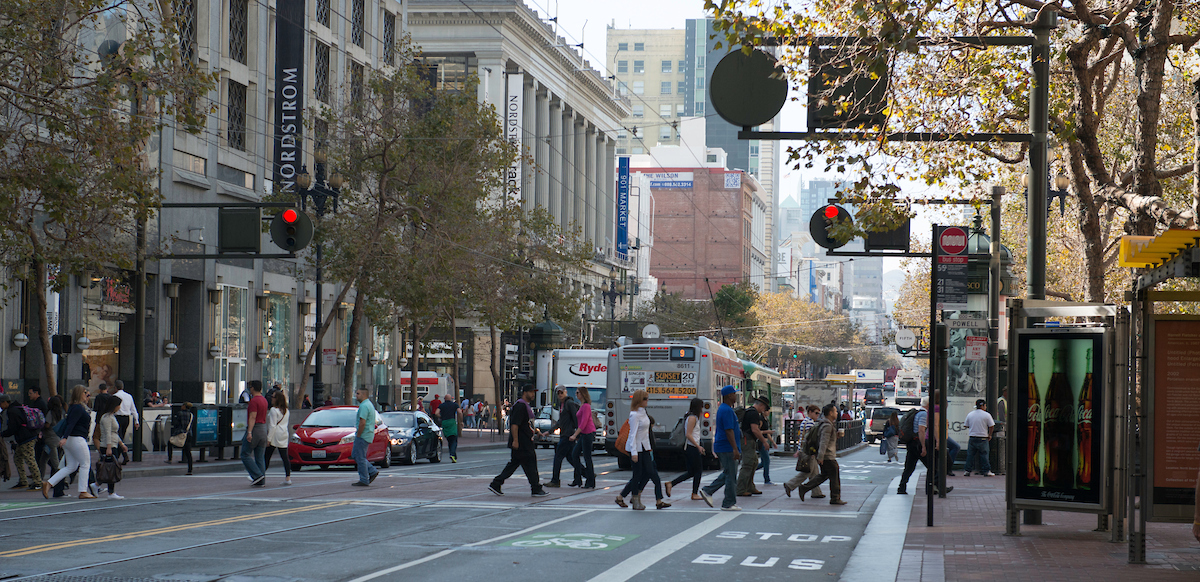
- Starting Jan. 29, Market Street will officially become car-free eastbound from 10th to Main and westbound from Steuart to Van Ness.
- Market Street is home to half of the top 10 intersections for pedestrian and bicycle collisions.
- Each year since 2014 the area averaged over 100 injury collisions per year - 75 percent of them involving people walking or biking.
- Work to implement this change has already begun.
Our Board of Directors meeting is usually held on the first and third Tuesdays of each month. To watch the meeting in full, go to SFGovTV.
Published January 28, 2020 at 04:46AM
https://ift.tt/2Rwou5Z
Show HN: Binarysearch.io – Learn Algorithms Together https://ift.tt/30XFyVH
Show HN: I made a time tracking software that tracks attention https://ift.tt/37yyoJN
Show HN: Screenshot Creator – Create beautiful assets for the App Store https://ift.tt/2tYkgv1
Show HN: Foxtrot – A computational algebra system with a notebook interface https://ift.tt/2GsRYeU
Show HN: I made an anonymous and complete insurance aggregator https://ift.tt/37HMRn7
Show HN: I Wrote a Python Program to Play Google Dino Game Using GestRecognition https://ift.tt/2O4j4wX
Show HN: Stop endlessly scrolling the web. Start your information diet https://ift.tt/2RTgF9l
Show HN: Work laptop doesn't allow minesweeper? I built my own minesweeper https://ift.tt/2t1hpAW
Show HN: Blöcke UI/UX Kit https://ift.tt/36xqorp
Show HN: Yakutils: Yet another collection of Python 3 helper functions https://ift.tt/37umelq
Show HN: egress-operator, a simple way to control Kubernetes egress traffic https://ift.tt/2RMIDn6
Senin, 27 Januari 2020
Show HN: A Simplified Jira Clone Built with React/Babel and Node/TypeScript https://ift.tt/2NZLt79
Show HN: Free Starter Bootstrap Website Templates https://ift.tt/30UA8uC
Show HN: CEO, Decision Making as a Service https://ift.tt/2O2bC5n
Show HN: We Turned the HN FAQs into an FAQ-Bot https://ift.tt/2voW4lU
Show HN: Low-Key Text-to-Speech and Speech-to-Text Open Source Software Stack https://ift.tt/30ZONEH
Show HN: MLonFHIR: Fusing Sklearn with the HL7 FHIR Standard https://ift.tt/2RQLYSj
Show HN: I built a website to better compare USB-C hubs found on Amazon https://ift.tt/2vq0ucf
Minggu, 26 Januari 2020
Show HN: How to Build Probabilistic Marketing Forecasts https://ift.tt/38CsGH9
Show HN: Serverless Golang Middleware https://ift.tt/2tUFNEG
Show HN: Emoji meaning list and search with big size emojis https://ift.tt/2Gr8CLC
Show HN: Awesome LD_PRELOAD https://ift.tt/2RTIajn
Show HN: A reveal.js plugin that allow using PlantUML diagrams on slides https://ift.tt/2O0IlYN
Show HN: Remote91 – Payroll, Taxation, Hiring of Remote Developers in India https://ift.tt/3aKJT2Q
Show HN: Mobile app to turn ebooks into high-quality audiobooks https://ift.tt/2uBIB9G
Show HN: Jupyter Notebook Blog Platform with Actions & GitHub Pages https://ift.tt/3aJo6Zu
Show HN: TribePulse – Thoughtful team communication for remote companies https://ift.tt/38CFk90
Show HN: R-cade, a simple arcade game engine for Racket https://ift.tt/37yf8fO
Show HN: Kubernetes Permission Manager, Free and OSS Tool to Manage RBAC/Users https://ift.tt/2RNetQY
Show HN: TinyGo interoperability with Arduino-based WebAssembly runtime https://ift.tt/2TTPePk
Show HN: An educational blockchain written in Go https://ift.tt/2GlHP3r
Show HN: From Zero to Kubeconfig In https://ift.tt/3aROiBk
Show HN: Simple app to break up larger decisions into many pairwise comparisons https://ift.tt/2ROPFrF
Sabtu, 25 Januari 2020
Show HN: Excalidraw – Sketch Hand-Drawn Like Diagrams https://ift.tt/2RK3bNe
Show HN: A tiny brainfuck interpreter written in Rust https://ift.tt/2TVhPE3
Show HN: CogSquared – identify and run behavioural science experiments https://ift.tt/38BeD4z
Show HN: Boxx — Create highly customizable terminal boxes that also look great! https://ift.tt/2Rp7luN
Show HN: Userbase – Add user accounts and persistence to your static site https://ift.tt/2NZi4Kr
Show HN: Startday – Free all-in-one freelance management app https://ift.tt/2Gq3GXi
Show HN: Not an experiment: We'll do your MVP for $499 https://ift.tt/2Rorktz
Show HN: Phoenix – a macOS window and app manager scriptable with JavaScript https://ift.tt/36uUmMN
Show HN: Kanye West Quotes API (Kanye as a Service) https://ift.tt/2NVCiF5
Show HN: The new Google search results look terrible, so I fixed them https://ift.tt/36taLkt
Show HN: Createresu.me – Client-Side PDF Resume Maker https://ift.tt/2NXweM5
Show HN: I built a visual reference tool for artists in ThreeJS https://ift.tt/2RKgjSB
This Weekend: Golden Gate Kennel Club Dog Show and Walk for Life
By Schad Dalton
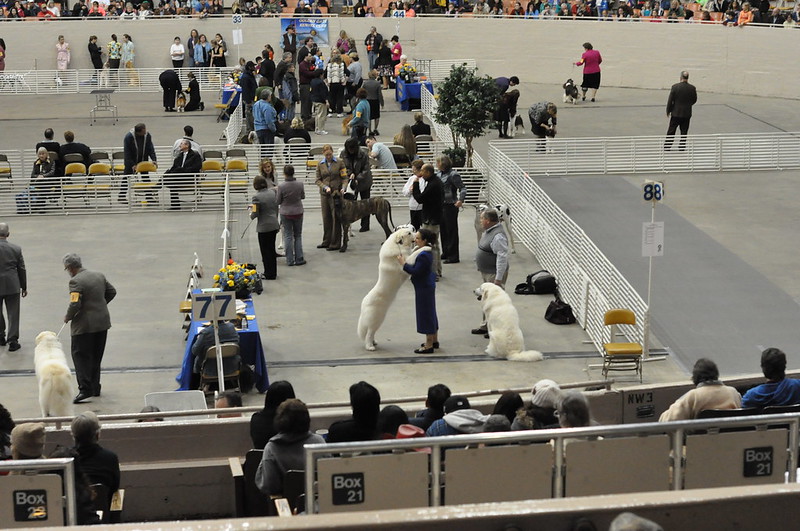
The Cow Palace will be for the dogs this weekend at the annual Golden Gate Kennel Club Dog Show at the Cow Palace. Photo: Flickr/aforonda
Golden Gate Kennel Club Dog Show
Saturday and Sunday, 8 a.m. to 5 p.m.
Cow Palace
The Golden Gate Kennel Club Dog Show returns this weekend to the Cow Palace and will feature 1.000 dogs from over 100 different breeds competing in the largest benched dog show on the West Coast. Anyone attending this event can meet and get to know the dogs (and their owners!) at the show at special benches organized by breed where you can learn more about the breeds, get training tips and more.
How to Get There on Muni: Riders may take the 8 Bayshore or the 9 San Bruno routes to the Cow Palace for this event.
Muni Service Notes: There are no planned service changes for this event.
Walk for Life
Saturday, 12:30 p.m.
Market Street East of Civic Center
The annual Walk for Life, which draws thousands of participants each year, will begin at 12:30 p.m. with a rally in the Civic Center/UN Plaza. At 1:30 p.m., the walk will move east on Market to Justin Herman Plaza.
How to Get There on Muni: Anyone interested in attending the march can get to the Civic Center via any Muni Metro line to Civic Center station, the F Market and Wharves Line, as well as the 6 Haight/Parnassus, 7 Haight/Noriega, 9 San Bruno, 14 Mission/14R Mission Rapid, 19 Polk or the 21 Hayes routes.
Muni Service Notes: The F Market and Wharves Line as well as the 1 California, 2 Clement, 5 Fulton, 6, 7, 8 Bayshore, 9, 10 Townsend, 12 Folsom/Pacific, 14/14R, 19, 21, 27 Bryant, 30 Stockton, 31 Balboa, 38 Geary/38R Geary Rapid, and 45 Union/Stockton routes will have reroutes during this event. Delays and extended wait times may be possible during the event.
Remember that you can take Muni for the entire day for a single $5 fare. The new $5 Day Pass, available on MuniMobile®, is part of Muni’s recent fare changes. The pass is intended to encourage a safe, convenient way to pay your fare and quickly board Muni vehicles, which reduces overall travel time for everyone. The $5 Day Pass is Muni bus, rail and historic streetcars only.
“On Tap” gives you a heads up about the big events in town and what Muni routes and lines will get you to the party. Look for this feature to be posted usually on Thursdays for a look ahead to the weekend. Check out our Weekend Traffic & Transit Advisory for more details.
Published January 25, 2020 at 12:39AM
https://ift.tt/38FQLwP
Show HN: Auto-block personal events on your work calendar https://ift.tt/2RmbsYK
Show HN: A simple tool for edge devices with flakey networking https://ift.tt/2TVZ9UC
Jumat, 24 Januari 2020
Show HN: Postgresqlco.nf: PostgreSQL Configuration for Humans https://ift.tt/2uxC9ko
Show HN: Introducing Webase, a Platform for Creating Applications https://ift.tt/2NUfkOk
Show HN: Teapong – A two-player game for fans of Pong and the Utah teapot https://ift.tt/30QyiL7
Show HN: WindTerm – A free fast innovative SSH/Telnet/Serial/Shell client https://ift.tt/38vHirE
Show HN: Almost Done the Makeover of My Open-Source YouTube Alternative https://ift.tt/2Gkas0Q
Show HN: Cross-Browser Addon for Wikipedia Section Links https://ift.tt/2sR8HVN
Update: Car-Free Market Street and FAQ
By Phillip Pierce
As you may have already heard (or read in our previous blog post), starting on Wednesday, January 29 some of the busiest sections of Market Street are going “Car Free” to increase safety and improve Muni. That means no private vehicles will be allowed to travel along Market Street eastbound from 10th to Main or westbound from Steuart to Van Ness. Traffic will still be able to cross Market, but there will be no turns onto the street in the car-free area.
Our crews are hard at work getting the street prepared and have already installed signs that will be unveiled on January 29th. In addition, we’ve created new pedestrian safety zones, added new loading zones and are extending the Muni lanes down Market Street.
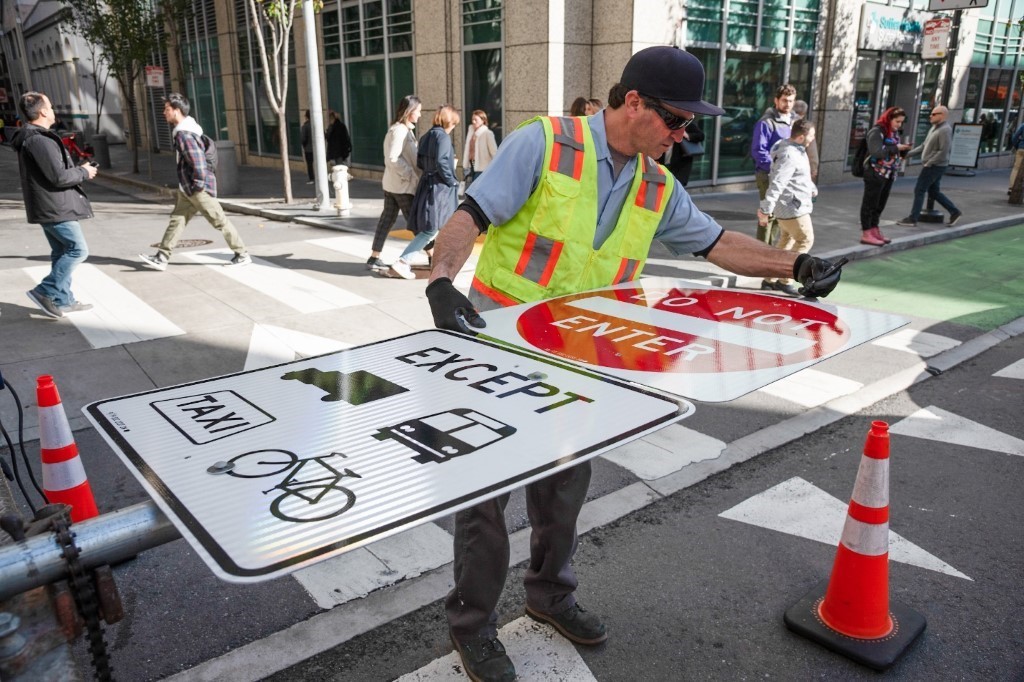
Crews installed signs alongside streets in preparation for the changes on January 29. Most signs were put up and will be covered up (or “bagged”) until next week when the car-free Market begins.
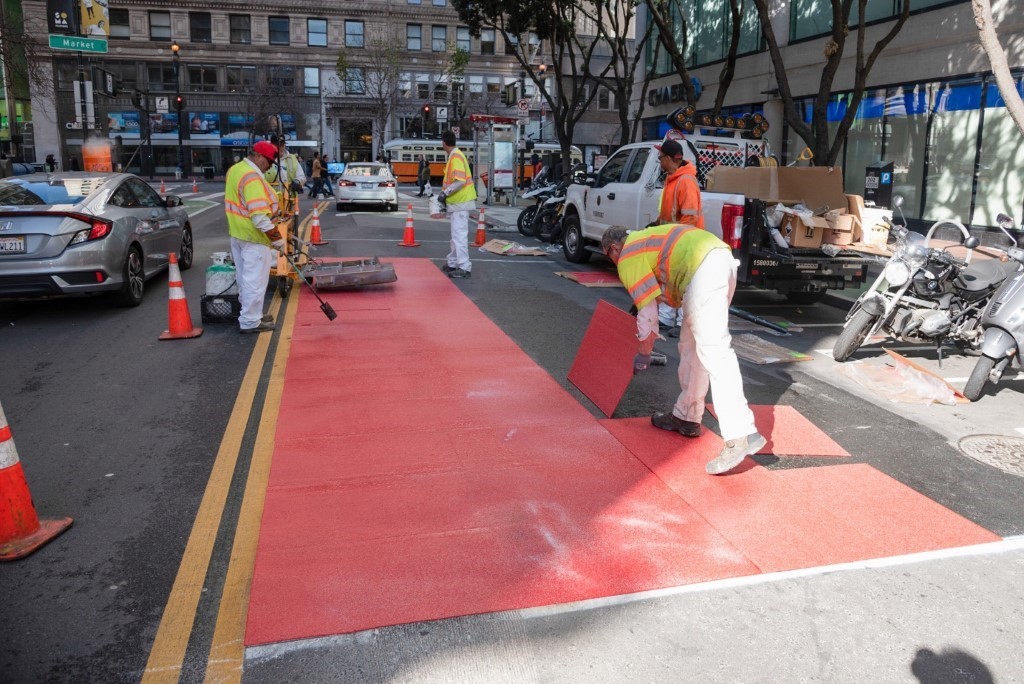
Red Muni lanes getting installed along 2nd Street near Market. As a part of the quick-build, Muni lanes are being extended east from 3rd to Main and on the last half-block of 2nd Street to improve transit in busy areas.
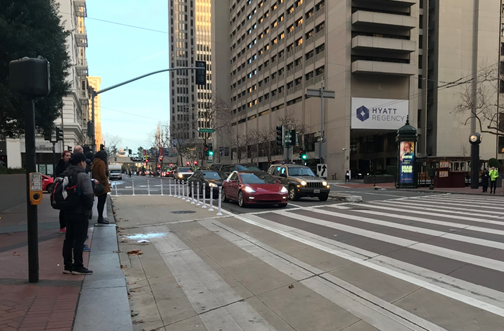
A new khaki-colored “painted safety zone” recently added at Drumm and Market will reduce conflicts and shrink street crossing distances for people walking.
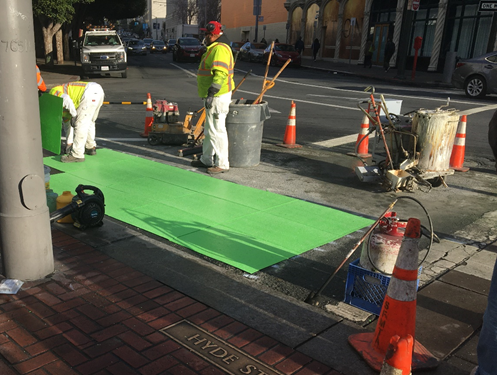
A new bicycle turn lane and bike box getting installed at Hyde/8th Street. In case you want to get into all the details, we compiled a set of some of our most frequently asked questions below.
Frequently Asked Questions
1. What is Better Market Street?
Better Market Street is the City’s multi-agency project to transform 2.2 miles of Market Street – from Octavia Boulevard to Steuart Street – enhancing safety and accessibility, improving transit performance, replacing aging infrastructure, and revitalizing the corridor’s streetscape. The goal of the project is to revitalize Market Street and reestablish the street as the premier cultural, civic and economic center of San Francisco and the Bay Area while bringing the transit system up to date.
There were 123 injury collisions on Market Street between Octavia and Steuart in the year 2018. Since 2014, there have been an average of more than 100 per year with 75 percent involving people walking or biking. You can find more info about the full Better Market Street project here.
2. What does “quick-build” mean?
A quick-build project consists of parking and traffic modifications that are fast and relatively cheap to implement. Examples include painted safety zones, bike lanes, adjustments to parking regulations, parking and loading changes, changes to the configuration of traffic lanes. Crews typically use materials such as paint, traffic signs, traffic delineators, and traffic signal changes. Quick-build projects do not involve large capital construction elements since those involve much longer design, higher cost contracting, and construction phases.
3. How many people use Market Street today?
Market is our city’s busiest street for people walking, biking and riding transit. Currently, about 200 to 400 cars drive in the peak direction on Market Street during rush hour. These changes will require those cars to find an alternative route while benefitting all the people walking, biking and using transit:
-
500,000 people walk on Market Street daily.
-
200 buses an hour during peak times.
-
650 people per hour ride bikes on Market Street during rush hour.
-
75,000 daily transit riders above ground.
4. What is going to change with the quick-build project and when?
Better Market’s Vision Zero quick-build phase will start in January 2020 and includes:
Beginning Wednesday, January 29th:
-
Making Market Street car-free eastbound from 10th to Main, and westbound from Steuart to Van Ness. Vehicles will still be allowed to cross Market street at intersections.
-
Similar car-free restrictions on Second Street (between Stevenson and Market) and Steuart Street (northbound between Mission and Market; southbound travel unchanged) to facilitate making Market Street car-free.
-
Peak hour loading restrictions on Market Street to reduce conflicts between people on bicycles, transit and commercial vehicles
-
No southside loading in the eastbound direction (towards the Ferry Building) on weekdays between 6:00 a.m. to 9:30 a.m.
-
No northside loading in the westbound direction (towards Twin Peaks) on weekdays between 3:00 pm and 7:30 pm.
-
Prohibiting right runs onto Valencia from eastbound Market Street (Friday 1/31/2020)
Completed:
-
Over 100 new cross-street passenger and commercial loading zones to accommodate safe loading.
Ongoing through Spring 2020:
-
Extending existing transit-only lane east from Third to Main Street, the segment of Market with the most transit service, and making it Muni-only (taxis and non-Muni buses will no longer be allowed).
-
Converting the existing red bus/taxi-only lane to Muni-only between 9th and 3rd streets.
-
Installing painted safety zones at eight intersections to make crossing the street safer and shorter.
-
Adding bicycle intersection improvements at Eighth, Page, Battery, and Valencia streets.
Beginning Summer 2020 and later:
-
Changes to sections of Ellis and Jones streets near Market Street to improve safety and vehicle movement.
5. Where is the car-free area?
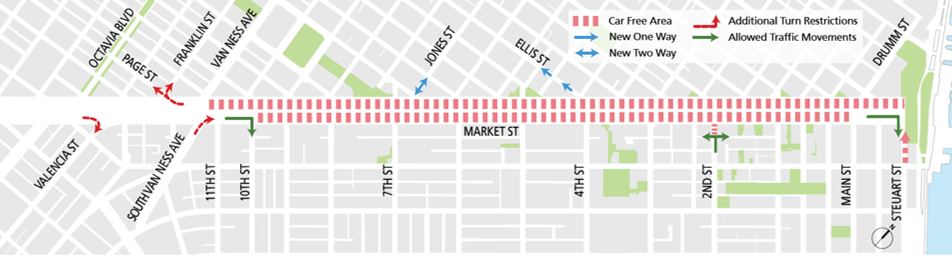
Private vehicles will be prohibited on Market Street eastbound from 10th to Main and westbound from Steuart to Van Ness. The car-free area is shown in the red areas below along with other changes shown by blue arrows.
6. Will I still be able to use Market Street to access Franklin and Gough?
Yes. The Quick-Build phase-only restricts traffic east of 10th or Van Ness. The future capital project would extend the turn restrictions west to 12th Street, but will not affect access to Franklin or Gough.
7. Will there be enforcement?
San Francisco Police and SFMTA Parking Control Officers will be helping to call attention to the new restrictions and directing traffic. Vehicles violating the restrictions could be cited for violating CVC 22101d (violating an official traffic control device) which carries a $238 fine and adds one point to a DMV record.
8. What sort of outreach are you doing?
Our teams have discussed various proposals with the community for years during the design phases for Better Market Street. We hosted 5 rounds of large public meetings, presented to dozens of groups and studied the corridor extensively. Outreach specific to the quick-build, car-free area included: social media, signs in parking garages, electronic signs on/above downtown streets, stakeholder meetings, multi-lingual flyers, door-to-door discussions, media stories, and messages on electronic NextBus signs in all Muni shelters. We also worked with all the app-based mapping companies to ensure they deliver accurate routes that avoid Market Street in the car-free area.
9. How will Quick-Build improve accessibility?
The private vehicle restrictions on Market Street and newly painted safety zones at select intersections will reduce pedestrian conflicts with vehicles. We also have provided additional loading zones on cross streets – over 100 new loading zones, including 23 new white zones and 8 new blue zones. The vast majority of the loading zones on cross streets are for general commercial loading (unlike the ones on Market, which are restricted to six-wheel vehicle restrictions) and can be used for up to three minutes for passenger loading. Maps of all the new and existing zones can be found here: SFMTA.com/BetterMarketStreet
10. How much will it cost?
The quick-build phase is estimated to cost approximately $3.5 million and is funded through local general funds.
11. Which vehicles will be allowed after private vehicles are restricted?
Transit, paratransit, taxis, commercial delivery vehicles and emergency vehicles (Transportation Network Companies such as Uber and Lyft are not permitted). All vehicles would continue to be allowed to access Franklin and Gough streets.
12. Are there any exceptions for vehicles with disability placards?
Vehicles with disability placards are not exempt from these restrictions unless they have commercial plates. It should be noted that there are not currently any blue zones or other legal parking available for vehicles with disability placards on Market Street, so Better Market Street does not add any new parking restrictions for people with disabilities.
13. Will deliveries still be allowed on Market Street?
Yes, as long as the delivery vehicles have commercial license plates. As is the case today, most of the loading zones on Market Street require vehicles to have at least six wheels (big trucks and buses). In addition, there will be new restrictions on deliveries during the peak-hours in the peak-direction to improve safety:
-
Southside loading in the eastbound direction (towards the Ferry Building) would not be allowed on weekdays from 6:00 a.m. to 9:30 a.m.
-
Northside loading in the westbound direction (towards Twin Peaks) would not be allowed between 3:00 p.m. and 7:30 p.m.
14. How are you coordinating with Uber and Lyft and other Transportation Network Companies (TNCs)?
TNCs are typically not commercial vehicles, and as such, they will not be allowed to drive on Market Street. However, we have coordinated with Uber and Lyft to have the white zones added to their apps, so that passengers wishing to have a pick-up on Market Street will be redirected to the closest cross-street white zone for their pick-up.
15. With cars no longer allowed to travel on Market Street, will traffic get worse on Mission Street and other parallel streets?
We did extensive traffic modeling to understand the impacts of removing cars from Market Street. Currently, about 200 to 400 cars drive on Market Street during peak hours, depending on the block and direction. Because streets north of Market and those in SoMa have grid layouts, people driving have extensive choices about which street to take, and will not all be diverted to the same street. We anticipate about 100 cars per hour will be shifted to Mission Street, which will not significantly impact general traffic or transit on Mission Street. In addition, the turn restrictions will reduce congestion at intersections, as cars turning onto Market currently block traffic on cross streets as they wait for a gap in pedestrians crossing to complete their turn. The turn restrictions will aim to improve traffic flow as well as pedestrian safety.
16. When was the project approved?
The Better Market Street project’s Environmental Impact Report was certified by the Planning Commission on October 10, 2019. The Public Works Hearing was held on October 11. The SFMTA Board approved the project on October 15, 2019.
17. Quick-Build is exciting, but when will the bigger construction project start?
The capital project will be built in phases, with each of the five phases estimated to be $150-200M. Much of the costs are state of good repair work, including rail and trackway replacement, the overhead wire system, traffic signals, repaving, streetlights, sewer, and water. Funding for Phase 1 has been secured through several existing local sources, including the voter-approved Prop A General Obligation Bond and Proposition K (formerly OBAG), as well as some federal funding through a BUILD transportation grant. The Better Market capital construction project is currently in design, with the first phase between 5th and 8th Streets anticipated to start construction in late 2020 or early 2021. We have more information on the full capital project construction and design available.
Published January 24, 2020 at 06:40AM
https://ift.tt/30OqbP4
Show HN: Infrastructure as Code Using AWS CDK https://ift.tt/2GmqbMM
Show HN: Built web app and PWA for musicians. Match loops, create bands and jam https://ift.tt/36p0eH8
Show HN: Timeflake, 128-bit roughly-ordered UUIDs https://ift.tt/2RIxaoS
Show HN: Real 3D mockups and elements now in Sketch https://ift.tt/2sR27yC
Show HN: Open-Source Alternative to Hubspot and Intercom https://ift.tt/2GkrU5A
Show HN: Top PDFs Posted to Hacker News in 2019 Computed from Internet Archive https://ift.tt/2TXwcI9
Show HN: I want to do an experiment: I'll do your MVP for $499 https://ift.tt/38yqEYn
Kamis, 23 Januari 2020
Show HN: XD2Sketch – How I built a profitable tool with one landing page https://ift.tt/2sPHrHe
Show HN: `lsvine -c -m 3 /etc` (or “zoom out” a file list) https://ift.tt/37ooN8r
Show HN: I made a productivity software that tracks Focus https://ift.tt/2tLDO5x
Show HN: I built a community for women entrepreneurs and makers https://ift.tt/36lDDLE
Show HN: SMHasher-passing hash function using floating point ops https://ift.tt/36h6noU
Show HN: Rust + GraphQL + Juniper + Diesel + Postgres + actix-web https://ift.tt/2NP4w4j
Show HN: Automating a Reddit Text-to-Speech YouTube Channel https://ift.tt/2RhpZ7P
Show HN: FlexyForm – Form Submission Backend as Service https://ift.tt/2uqa6D6
Show HN: A Simple Way to Setup/Build/Deploy React App and API on GKE/Kubernetes https://ift.tt/2GkgNJz
HeadsUp: Nightly Subway Maintenance Starting January 26
By Benjamin Barnett
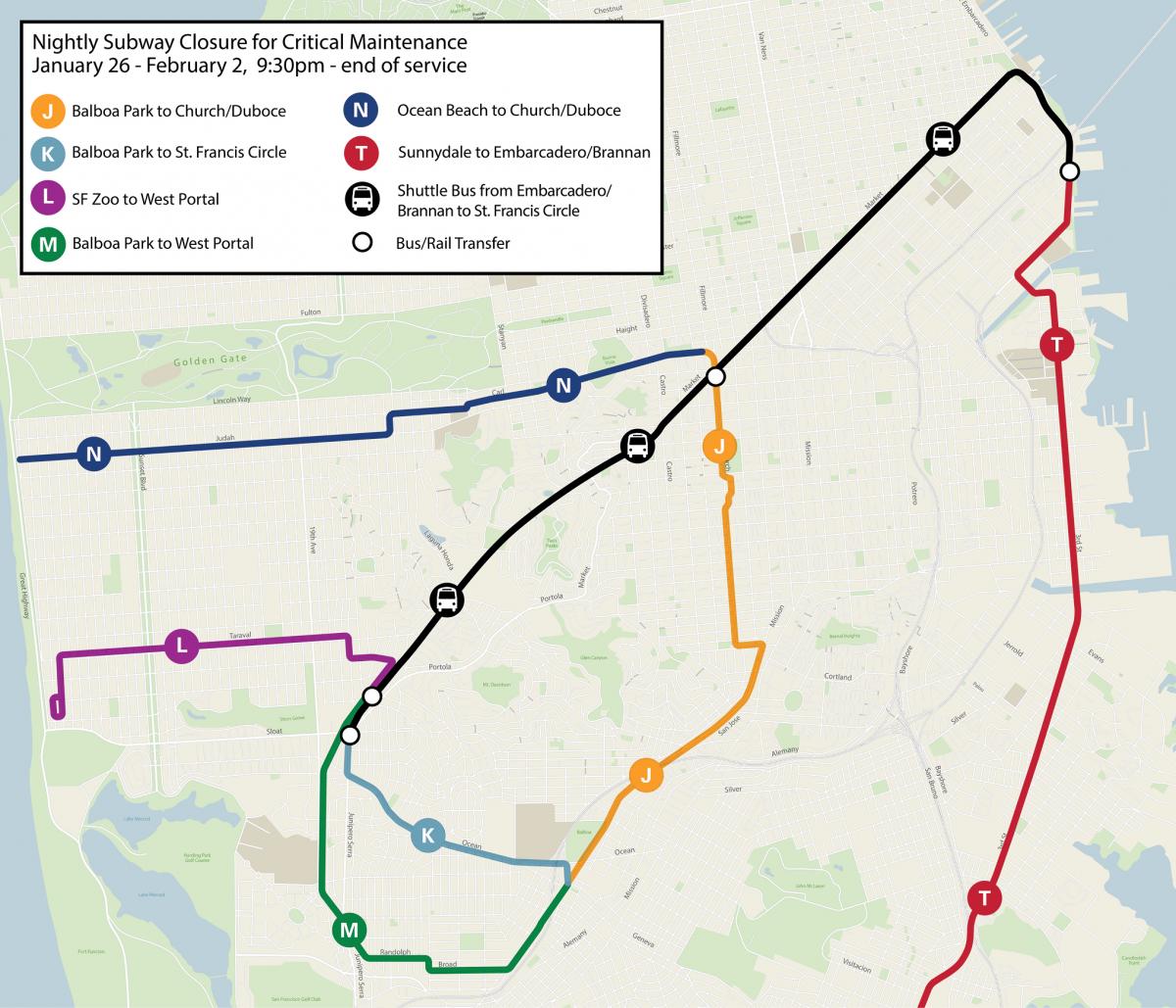
The subway will be closing early each night at 9:30 p.m. starting January 26 and continuing for approximately one week for extended maintenance hours. Bus substitution service will connect to all stops.
On most nights, our teams have about two hours to get work done between evening and morning service. In order to complete critical maintenance tasks that cannot be completed during normal windows, we are planning this week of early subway closures, so crews have more hours each night to do vital work. This is our ongoing effort to maintain the subway infrastructure to ensure safety and reliability. The last early subway closures for maintenance took place in August 2019.
What Are We Doing?
- Track Maintenance. Installing new track hardware in a pilot segment to evaluate new technology.
- Signal Maintenance. Perform cable tests and inspections to identify problems and future upgrades.
- Overhead Lines. Replace worn overhead wire; Adjust system supports and tension to deliver better performance of pantographs and improve overhead wire life.
- Custodial Services. Deep cleaning each station.
- Station Maintenance. Address overdue or restricted access maintenance and preventative maintenance priorities.
When the subway closes, buses will run above ground to connect all stops through the normal end of train service. Owl service will remain unchanged. Trains will start regular morning service each day.
Transit Service Plan – 9:30 p.m. to 1 a.m.
- Shuttle buses will serve all Muni Metro stops between Embarcadero & Brannan and St. Francis Circle
- K – Train service between Balboa Park and St. Francis Circle
- L – Train service between SF Zoo and West Portal
- M – Train service between Balboa Park and West Portal
- N – Train service between Ocean Beach and Church & Duboce
- J – Train service between Balboa Park and Church & Duboce
- T – Train service between Sunnydale and Embarcadero & Brannan
Inbound N Judah and outbound J Church trains will use the accessible stop entering the Duboce Portal to serve customers needing the ramp.
Plan extra travel time when riding Muni during subway closure. Regular bus fares will apply on bus shuttles and valid transfers will be accepted.
What Did We Complete In August?
Track Maintenace
- Replaced four worn switch points.
- Removed and replaced two sections of corroded rail.
- Replaced two curved switch points at Duboce.
Signal Maintenace
- Replaced batteries for the following relay rooms: Church, Civic Center, Castro, Embarcadero, Forest Hill and Powell Station.
- Provided support to Track Maintenance to make final adjustments to the switches.
- Performed an end to end inspection of the ATCS (Automatic Train Control System) from West Portal to Castro Station.
Overhead Lines
- Replaced a total of 4700 feet of overhead contact wire and support hardware at various locations.
- Eliminated 30 wire splices
- Removed, replaced and aligned five Section Breaks
Published January 23, 2020 at 12:55AM
https://ift.tt/2NQFbGY
Rabu, 22 Januari 2020
Show HN: Announcing Bot Framework SDK for Go https://ift.tt/2txsx99
Show HN: Codechecker – imple tool to find regular expression match in codebase https://ift.tt/3axQb5L
Show HN: Terminal Phase – Terminal-based space shooter https://ift.tt/2ulu81G
Show HN: New drag and drop search engine https://ift.tt/2RJJTYc
Show HN: UI-Editor, a Component Builder https://ift.tt/30I3ooa
Show HN: Realtime Postgres https://ift.tt/2NJ9IXl
Show HN: Neon – Generative art piece made using 2D vector field https://ift.tt/30GKyOe
Show HN: Extension to not see Google results as ads https://ift.tt/38p5FqQ
Show HN: Minimalist OOP Language That Compiles to LLVM IR https://ift.tt/2RGyqIP
Show HN: Recover Undeleted JPGs https://ift.tt/37i1D3o
Show HN: World's Biggest Crossword App https://ift.tt/2sMYs51
Show HN: Boards for Mac https://ift.tt/2NKKYy0
Show HN: coolAnalytics - A cool trend analytics, without tracking visitors https://ift.tt/2tEo6t4
Show HN: Mec.py Mathematical Expression Calculator https://ift.tt/2O2Tp83
Show HN: CSV-nix-tools – Collection of tools for processing system information https://ift.tt/2sHuLlE
SFMTA Public Meetings January 21 - February 4
By
Board of Directors Meeting
Tuesday, January 21, 1 p.m.
City Hall, Room 400
Nearby Muni Routes: 5, 19, 21, 47, 49, F Market, Civic Center Station
The SFMTA Board of Directors provides policy oversight for the safe and efficient transportation of goods and services in San Francisco. This includes the San Francisco Municipal Railway (Muni), automobiles and trucks, taxis, bicycling and walking. The SFMTA Board of Directors also serves as members of the San Francisco Parking Authority.
Our board of directors meetings are usually held on the first and third Tuesdays of each month. The agenda for Tuesday's meeting includes presentations regarding the recommendations of the San Francisco Muni Reliability Working Group, the Building Progress Program and the new Adaptive Scooter Share Program.
Van Ness Business Advisory Committee Meeting
Thursday, January 23, 6 p.m.
Union Square Conference Room
Nearby Muni Routes: 5, 6, 7, 9, 19, 47, 49, Van Ness Station
The Van Ness Business Advisory Committee is made up of representatives from a diverse cross-section of Van Ness Project Corridor businesses. Members act as the voice of the community and provide recommendations and advice on how staff can best work with local businesses during construction of the Van Ness Corridor Transit Improvement Project to bring out the character that has made this vital thoroughfare one of the city’s grand avenues. Members of the public may address the Van Ness Business Advisory Committee on matters that are within its jurisdiction and are not on today’s calendar.
Board of Directors Special Meeting
Tuesday, January 28, 9 a.m.
SFCTA Hearing Room, 22nd Floor
Nearby Muni Routes: 5, 6, 7, 9, 19, 47, 49, Van Ness Station
The SFMTA Board of Directors is holding the yearly workshop to discuss the challenges and successes of the past year. Discussion and presentations will include transportation plans, updates to the strategic plan and the upcoming fiscal year budget.
Our Meeting Round-Up feature highlights different SFMTA public meetings that will be held within the coming two weeks. These meetings give you the chance to share your ideas and provide us with helpful feedback. Join us at our next meeting to learn more about SF's changing and complex transportation system.
Those listed above are just a few highlights. You can find a full list of upcoming meetings to keep up to date on your favorite SFMTA committees.
Published January 22, 2020 at 03:49AM
https://ift.tt/2Rdduue
Show HN: A newsletter aggregating stock chatter on wallstreetbets, 4chan https://ift.tt/2ReQ9bt
Show HN: From attachments to trackable microsite in 60 secs https://ift.tt/2NMxO3r
Show HN: React Nice Dates https://ift.tt/2G8Bs3m
Show HN: I'm building an open, crowdsourced database of ML models https://ift.tt/36dtH6P
Show HN: IRIX – color scheme editor and color tools https://ift.tt/38raAYp
Selasa, 21 Januari 2020
Show HN: Automate your UI testing with a click of a button https://ift.tt/38ucdo6
Show HN: Train a language model to talk like you https://ift.tt/36hCBAe
Show HN: Go SDK for Building Microsoft Teams Applications https://ift.tt/36d9Apr
Show HN: Personal Card Will Be Your Business Card https://ift.tt/36f8dGJ
Show HN: How interactive containers work (Docker, Kubernetes, and alike) https://ift.tt/3avpTBd
Show HN: A batched, concurrent wrapper for OpenAI gym library https://ift.tt/30G6kBH
Show HN: Hire product and business managers using take-home assignments https://ift.tt/36d2C3B
Show HN: Mapipedia: Platform to show your data on maps and sharing with others https://ift.tt/30DOorq
Show HN: MiceRanger – Fast Imputation with Random Forests https://ift.tt/2Rd9Hgw
Show HN: Bash Script to Install a Webserver (Apache or Nginx), PHP on a Clean OS https://ift.tt/2RejO4o
Show HN: A vimscript to help you improve your Vim muscle memory https://ift.tt/2NL4JoT
Show HN: Webservers as one-liner runnable code https://ift.tt/2G7pBmj
Show HN: Browse my blog with netcat/plain TCP https://ift.tt/2NHF3cO
Show HN: Visual Communication for Elite Software Professionals https://ift.tt/369ujuk
Show HN: WebRTC based encrypted data transfer between peers https://ift.tt/37fSHLW
Show HN: Open-source social network for learning https://ift.tt/2RbfLG7
Show HN: I built a browser based interactive React course https://ift.tt/3avgyJy
Show HN: How to build a live, face-to-face video chat app in Ruby on Rails 6.0.2 https://ift.tt/2G8hRk0
Show HN: Epanet-JS – Simulate a water distribution network in JavaScript https://ift.tt/30E0nVT
Show HN: Ganzo – A GAN Framework https://ift.tt/2G49eH4
Senin, 20 Januari 2020
Show HN: Get a bit field view of any ArrayBuffer in JavaScript https://ift.tt/37nUpuI
Show HN: Submit Your Software or Product or Business Deal [Free Listing] https://ift.tt/2TIDCPc
Show HN: A minimalist and productivity-focused news reader https://ift.tt/2NIvryB
Show HN: Nebula Graph Studio 1.0 – Visualize graph data for you https://ift.tt/38tzkzv
Show HN: How to build a face-to-face video chat app in Ruby on Rails 6.0.2.1 https://ift.tt/38fapPY
Show HN: Google Sheets add-on to compare text, fuzzy-match, highlight duplicates https://ift.tt/365g6hV
Show HN: I published 100 AI generated books on Amazon https://ift.tt/38hCrtW
Show HN: Chrome Extension to see results with the previous style (green URLs) https://ift.tt/2NEEeSg
Show HN: Prehistoric – A browser based simulation of prehistoric economy [alpha] https://ift.tt/3aq4CsJ
Show HN: Proton Native V2 – Create Cross Platform Desktop Apps with React https://ift.tt/379wBLd
Show HN: YouTube-dl wrapper (with added features) to easily manage YouTube audio https://ift.tt/2txwQkG
Show HN: Remake – A server-rendered framework for building CRUD web apps fast https://ift.tt/2NCBy7u
Minggu, 19 Januari 2020
Show HN: A set of standard document templates https://ift.tt/369PcFD
Show HN: Machine Learning Experiments Organizer https://ift.tt/30zc2oU
Show HN: I made a simple and cheap brand monitoring tool https://ift.tt/3anHdrR
Show HN: Stubdb – database for projects too small to fail https://ift.tt/2NCLmi0
Show HN: Net Worth Verification https://ift.tt/2uif98z
Show HN: Study, research and learn with thinking notebook – MindForger 1.50.0 https://ift.tt/30GsZOs
Show HN: I built an issue tracker where every issue is a 2-way sync slack thread https://ift.tt/2NGYUZH
Show HN: Automate HQL partition-based date ranges https://ift.tt/2Ra8BSJ
Show HN: YOLO+fire – move from HCOL to LCOL so you can retire early https://ift.tt/2TA1Riw
Show HN: How good are you at spotting lookalike domains? https://ift.tt/2G4MWVG
Show HN: Hands-Free Heart Rate – Measure Pulse with Selfie Camera (iOS for Now) https://ift.tt/368volS
Show HN: Cheaper lightweight alternative to Typeform https://ift.tt/2TC7qx2
Sabtu, 18 Januari 2020
Show HN: Flash Philips Hue light bulbs depending on Datadog monitors status https://ift.tt/2G1pFnl
Show HN: Gpt2bot – A new Telegram chatbot trained on gigs of Reddit discussions https://ift.tt/30wZaQc
Show HN: Get a Kubernetes LoadBalancer where you never thought it was possible https://ift.tt/2G2PtiZ
Show HN: Beamsplitter – Hash function that uses only S-boxes https://ift.tt/377io1o
Show HN: Privacy conscious, discovery focused search engine – Whize (Alpha) https://ift.tt/2R3l36x
Show HN: Automated RSS Torrent Manager https://ift.tt/30DTDr5
Show HN: Store your luggage in local shops https://ift.tt/38iJ13q
Show HN: Clapbutton.com – A medium like clap button for any blog https://ift.tt/38e24Mc
Show HN: OneDev – A Lightweight GitLab Alternative https://ift.tt/2FY7ZJm
Show HN: Display JSON and GraphQL Services with Vue and HTML (No JavaScript) https://ift.tt/3avexNM
Show HN: I've been working on X11 on (jailbroken) iOS https://ift.tt/30tLplm
SF Restaurant Week: January 22nd-31st
By Jeanne Brophy
It’s once again time for San Francisco Restaurant Week, where some of the best neighborhood restaurants thoughtfully create prix-fixe menus that highlight some of their signature tastes or take the opportunity to feature a new dish. It’s a great week of restaurants strutting their creativity to give you, the diner, a peek at the food to tempt you to return.
This year SF Restaurant Week will feature two-course lunch and three or more course dinner menus at different prices determined by the restaurant:
Lunch (2+ course): $15.15 & $25.25
Dinner (3+ course): $40.40 & $65.65 menus
Visit the SF Restaurant Week listings to choose by neighborhood or cuisine preference—menus are also included.
You may want to get yourself out via the 5 Fulton to experience the neighborhood gem Cassava where they are known for an exceptional Japanese breakfast of miso soup, market fish, pickles and the most sublime soft shell-poached egg in broth you may ever experience—right there in the Balboa District.
Grab a colleague and hope on one of the vintage street cars (Line F) for an extended lunch at Starbelly over in the Castro for that fried chicken po’boy with jalapeno and radicchio slaw.
Dinner options are wide-ranging: you can’t go wrong at Blue Plate on Mission Street, easily accessible by the 14, J Church and 49. Offerings include the indulgent black truffle gnocchi, blue plate meatloaf or egg tagliorni with lemon. An exceptional value can be found at China Live, a 30,000 square foot culinary and cultural destination in the heart of Chinatown.
Whatever way you get there SF Restaurant Week offers Mexican, Indian, Italian, Caribbean and all sorts of tasty delights for lunch or dinner. Check out a new neighborhood and support a small business between January 22-31.
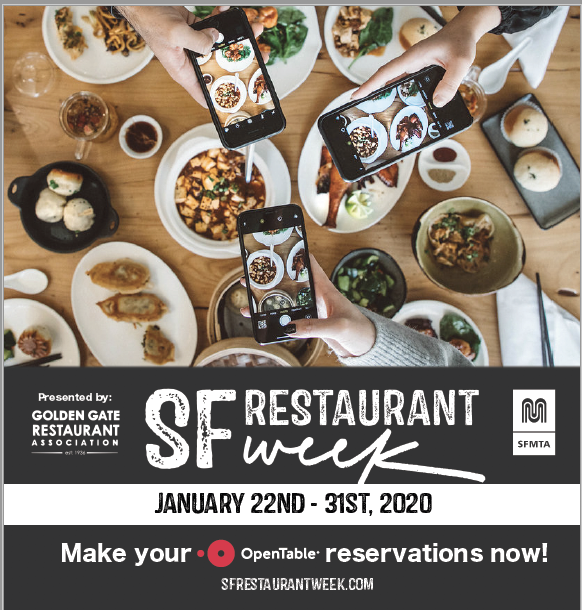
SF Restaurant Week, January 22-31, features two-course lunch and three or more course dinner menus.
Published January 18, 2020 at 06:31AM
https://ift.tt/30wxhaO
Adaptive Scooters for People with Disabilities
By
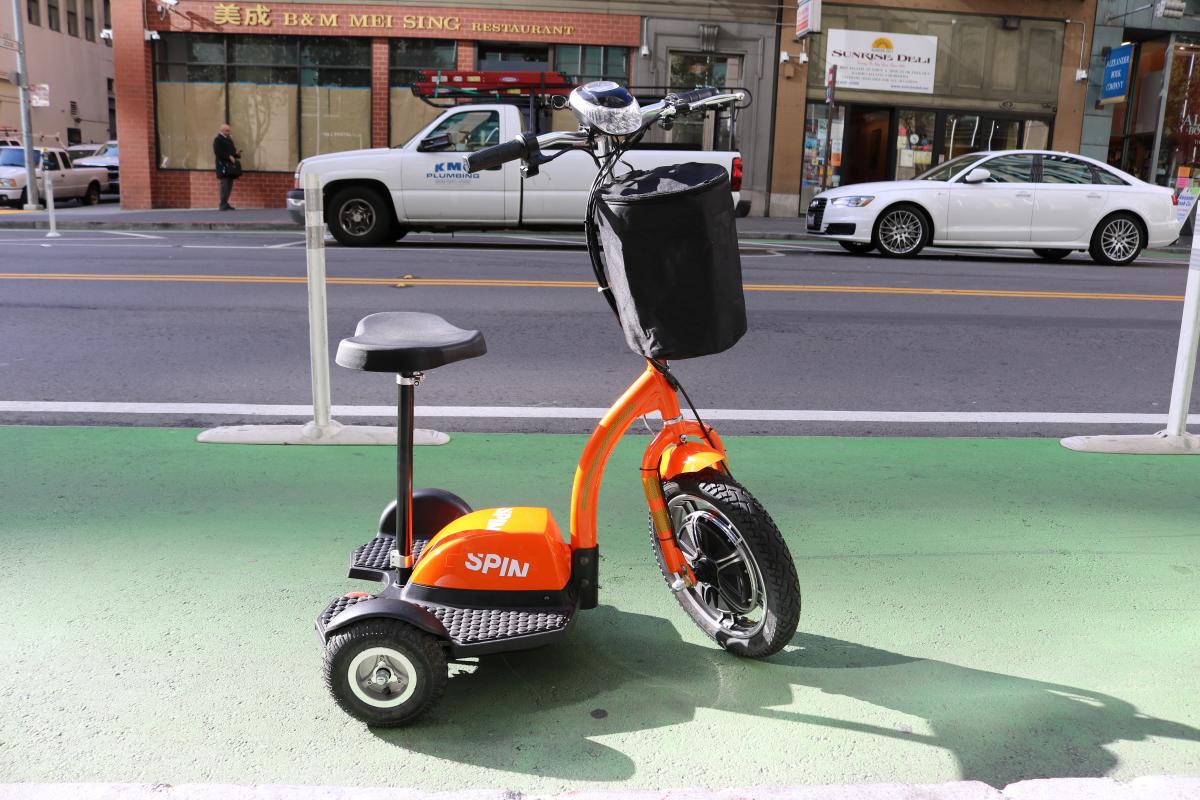
We are committed to a transportation system that serves everyone. However, the recent and rapid introduction of new transportation services has not always included all San Francisco residents and visitors, especially people with disabilities. As an agency, we are actively shaping our approach to emerging mobility services and technologies to ensure that they are accessible to all. That is why we were a proud partner in last summer’s adaptive bike-share pilot and, when we established a permanent permit program for Powered Scooter Share, we required that all permittees develop an adaptive scooter pilot program to make shared micromobility more accessible to people with disabilities. Starting January 15, 2020, four unique adaptive scooter pilot programs, with a total of 50 adaptive scooters, are now available to the public through our permitted scooter operators, Jump, Lime, Scoot, and Spin.
A program of this kind is very new and we do not have many peer programs to look toward for guidance. Because of this, the SFMTA did not require applicants to deploy a specific vehicle type or service model. Rather, permittees were instructed to develop vehicles and corresponding services that are based on input from people with disabilities. Below we have prepared a summary of each permittee’s respective pilot program. As these programs may change over time, we encourage you to visit each company’s website for current updates.
From the pilots, we hope to better understand the device types, fleet sizes, and program models that will best fit the needs of a diverse group of riders with disabilities who have not had access to the standard shared scooter program. Permittees are expected to actively solicit input and feedback on their pilots and iterate on their initial vehicle and program designs in order to best meet community needs. Our learnings throughout the pilot will help to inform any permanent program or requirements moving forward.
In addition to providing equal access to all services, we are always committed to ensuring that scooters and other shared micromobility vehicles do not endanger pedestrians or otherwise hamper accessibility of the streets and sidewalks. We are closely monitoring operator performance so that we can enforce and, when needed, void operator contracts. Our enforcement team is out in the field tracking scooter activity and responding to complaints. Investigators cite shared scooters that do not comply with our parking guidelines and notify scooter companies of sidewalk riding. Permittees must investigate and resolve all sidewalk riding reports. We are also working with 311 to improve processes and make it easier for the public to make complaints about both improper parking and riding.
We want to hear from you and look forward to hosting formal opportunities for feedback during the mid-point of the pilot. In the meantime, you may submit a comment through our Regulated and Emerging Mobility Comment Form or through 311. And, if you are a resident or regular visitor to San Francisco and have a disability, we encourage you to complete this survey on your experiences, perceptions, and priorities around emerging mobility services. Respondents are eligible to win a $50 Safeway gift card from the survey administrator, UCLA.
|
|
Jump |
Lime |
Scoot |
Spin |
| Device Type | 3-wheeled scooter | 2-wheeled scooter with seat | 2-wheeled scooter with seat |
3-Wheeled Device with |
| Number of Devices |
2 RASSINÉ Tristar Scooters at launch (plan to scale to 10 total vehicles) |
22 at the start with plans to increase to 33 | 10 |
10 - 15 |
| Reservation Process |
Please call or email to make a reservation 24 hours in advance. Phone Number: (415) 326-4880 |
Reserve in-app, at least 24 hours in advance. The scooter will be delivered and picked up to/from the rider. |
This pilot is not yet open to the public. Please contact Bob at bob@scoot.co for more information. |
Set up an account and make reservations: |
| Service Area/Pick-Up Drop Off Locations |
Pick-up/Drop-Off at: 140 Bluxome Street, San Francisco, CA 94107 |
The whole city (except hilly park areas: Lincoln Park, GG Park, Panhandle, Lake Merced Park, and Twin Peaks Area) | Same as the standard device service area. | Rent from 1144 Howard St Return to 3 locations: 588 Brannan St, 530 Broadway St., 1537 Mission St. Devices limited to 10-degree slopes or lower |
| Service Hours | Monday - Friday 8:30 a.m. - 5 p.m. | Reservations 7 days/week, 8 a.m.- 6 p.m., excluding holidays. Once reserved, access for 24hr | Same as standard device availability. | All Weekdays 9:00 a.m. - 5:30 p.m., except in inclement weather |
| Cost | Free for limited time | $32/day (Lime Access users get 50% discount) | Free | Free, may change over course of the pilot. |
| Payment Method | Free for limited time | Credit card (and text-to unlock feature) or cash via Pay Near Me for Lime Access Users | Free | N/A |
Published January 18, 2020 at 06:43AM
https://ift.tt/374AIbv